Table of Content click to show or hide
Timetable
| Monday | Tuesday | Wednesday | Thursday | Friday | ||
| 13,July | 14,July | 15,July | 16,July | 17,July | ||
| Morning | 8:30-10:10 | Shaoying Liu | Zhiming Liu | Xuejun Wen, Ting Dai & Chengqiang Huang | Shaoying Liu | Zhiming Liu |
| (Hiroshima University) | (Southwest University) | (Huawei) | (Hiroshima University) | (Southwest University) | ||
| 10:10-10:30 | Break | Break | Break | Break | Break | |
| 10:30-12:00 | Shaoying Liu | Zhiming Liu | Xuejun Wen, Ting Dai & Chengqiang Huang | Shaoying Liu | Zhiming Liu | |
| Noon | 12:00-14:00 | Lunch | Lunch | Lunch | Lunch | |
| Afternoon | 14:00-15:30 | Xiaowei Huang | Xiaowei Huang start from 3p.m. | Guy Katz | Guy Katz | |
| (Liverpool University) | (Liverpool University) | (The Hebrew University of Jerusalem) | (The Hebrew University of Jerusalem) | |||
| 15:30-15:50 | Break | Break | Break | Break | ||
| 15:50-17:20 | Xiaowei Huang | Xiaowei Huang | Guy Katz | Guy Katz |
Conventional software engineering based on informal or semi-formal methods are facing tremendous challenges in ensuring software quality. Formal methods have attempted to address those challenges by introducing mathematical notation and calculus to support formal specification, refinement, and verification in software development. However, in spite of their theoretical potential in improving the controllability of software process and reliability, formal methods are difficult to apply to large-scale and complex systems in practice due to many constraints (e.g., limited expertise, complexity, changing requirements).
"Formal Engineering Methods" (FEM) has been proposed and developed as a research area since 1997 to study how formal methods can be effectively integrated into conventional software engineering process to improve software productivity and quality in practice. A specific representative FEM called Structured Object-Oriented Formal Language (SOFL) has also be developed over the last two decades that offers three rigorous but practical techniques for system modeling and verification: three-step formal specification approach, specification-based inspection, and specification-based testing. The effective combination of these three techniques can significantly enhance software productivity and quality.
This course aims to teach students how formal engineering techniques can be effectively used in conventional software engineering process to enhance software productivity and quality through introducing SOFL. After learning this course, students are expected to understand (1) essential knowledge and skills for writing formal specifications, (2) how to construct formal specifications based on informal requirements, (3) how to balance simplicity, visualization, and precision in software development, and (7) future research directions in formal engineering methods.

Human-Cyber-Physical Systems (HCPS) is a combination of Cyber-Physical Systems (CPS) with ubiquitous computing (also known as intelligent environment) and social systems, including social computing. In HCPS, humans as individuals or unorganized and organized crowds deeply involved in interactions with physical and cyber systems, and operation and control of physical processes and hardware dynamically shift between humans and machines. The theory and methods of HCPS is still in its infancy, and research is needed to establish its scientific foundation so as to make advances in its engineering methods.
In this short course, we reflect the development of software engineering through software abstractions and show that these abstractions are integral in the notion of software system architectures. We discuss that it is important to engineer systems using formal methods in relation to the definition and management of development processes, and argue how a model of the software architecture, with rich semantics and refinement relations, plays an important role in this process. We recall the traditional separation of processes for domain modelling and software requirements modelling in model-driven software development. We then propose to combine these modelling approaches and this naturally leads to a unified process for HCPS architecture modelling, design, and evolution. Based on the unified processes, we outline a framework in engineering formal methods for HCPS modelling, with the discussion about significant challenges including integration, composition, collaboration, verification of HCPS with multi-dimensional heterogeneity. Human components, as well as all kinds of artificial intelligent systems, are particularly major courses of the heterogeneity.
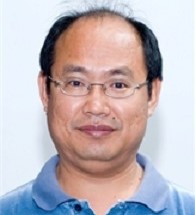
Significant progress has been made in the development of deep neural networks (DNNs), which now outperform humans in several difficult tasks, such as image classification, natural language processing, and two-player games. Given the prospect of a broad deployment of DNNs in a wide range of applications, concerns regarding the safety and trustworthiness of DNNs have been raised. In this lecture series, I will review two threads of existing research towards safety certification of DNNs. The first thread is on the formal verification. In particular, I will focus on constraint-based methods, approximation techniques, and anytime algorithms. The second thread of research is on the safety assurance of DNNs through testing- based method. This is based on an established approach that has been recommended in industrial standards such as ISO26262 for automotive software and DO178B/C for avionic software, and it has been adapted for DNNs.
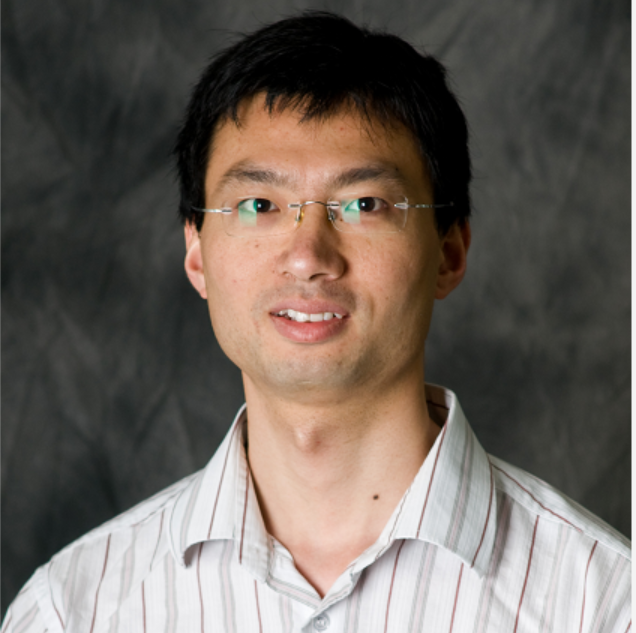
Deep neural networks have emerged as a widely used and effective means for tackling complex, real-world problems. However, a major obstacle in incorporating them as controllers in safety-critical systems is the great difficulty in providing formal guarantees about their behavior. In recent years, attempts have been made to address this obstacle by formally verifying neural networks. However, neural network verification is a computationally difficult task, and traditional verification techniques have often had only limited success - leading to the development of novel techniques. In this series of talks we will survey the state of the art in neural network verification, focusing on Satisfiability Modulo Theories (SMT) based approaches and on abstraction/refinement based methods. Additionally, we will survey recent advances in the verification of recurrent neural networks. Finally, we will discuss the applicability of neural network verification, going over examples that include airborne collision avoidance, neural network simplification, and the verification of rate control algorithms.
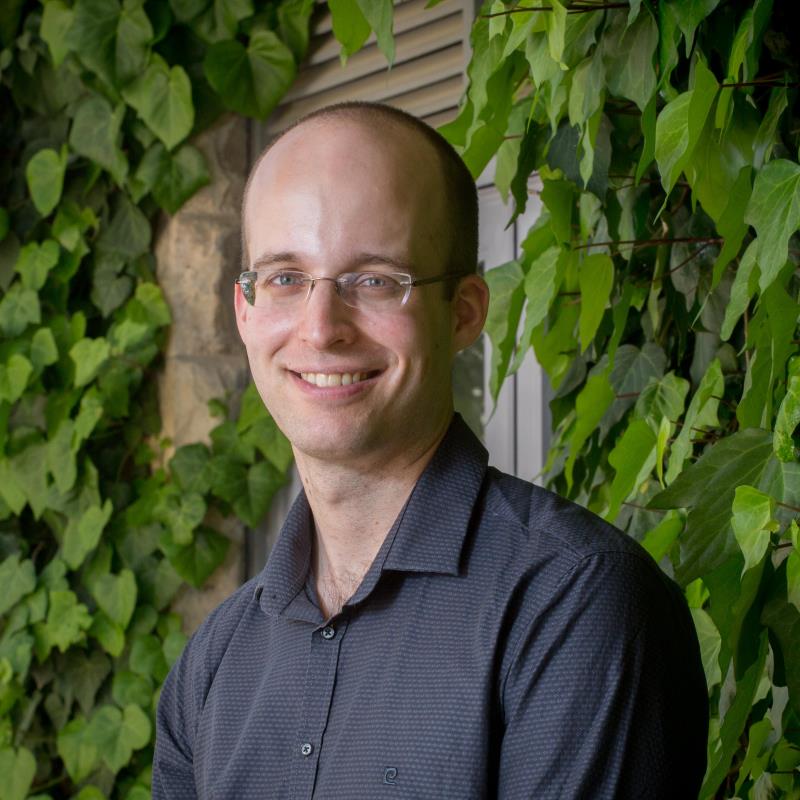


In this talk we will briefly discuss the current applications of formal verification of neural network robustness in Huawei. The desire features of the verification methods in industrial products will be highlighted. Some promising on-going research directions will also be discussed in the purpose of discovering new research ideas and applications of formal verification methods in the field of AI robustness.